Pedestrian-protection wiper-pivot innovation.
From a patented breakaway ferrule that established regulatory feasibility to a lighter frangible casting architecture that entered production and became the Trico standard.
A new European requirement exposed a strategic product gap
Emerging European pedestrian-protection requirements treated the rear portion of the hood, including the scuttle and wiper-spindle area, as part of the exterior head-impact environment. A rigid windshield-wiper pivot beneath that area could act as a concentrated hard point during an impact.
Trico did not yet have a validated pivot architecture capable of surviving normal wiper-system loads while releasing below a controlled maximum impact load. Without a credible solution, the company risked being excluded from European programs whose vehicle geometry placed a wiper pivot within the applicable impact zone.
Suspend the module below the mounting surface and make the ferrule sacrificial
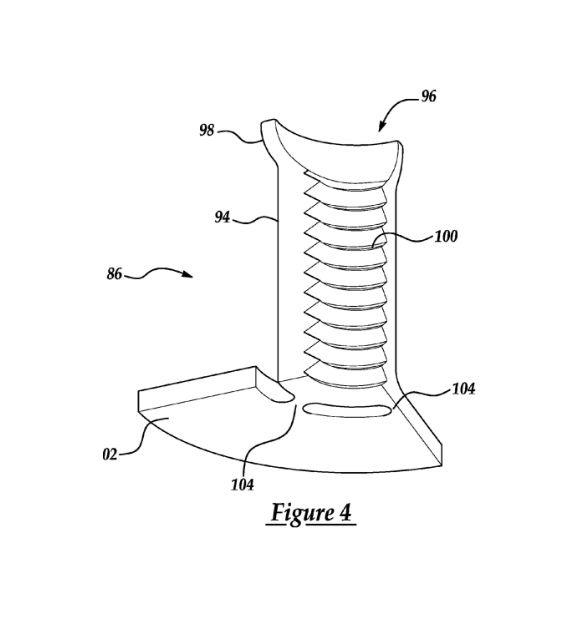
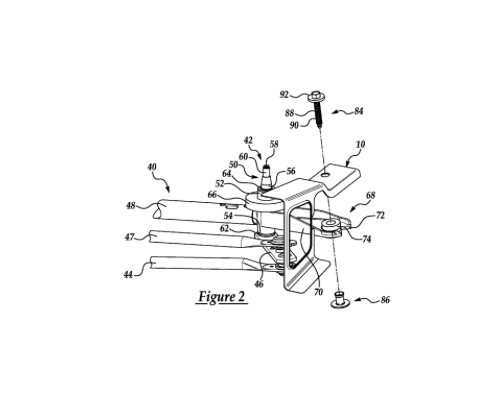
I originated a mounting architecture that suspended the wiper system below the vehicle attachment surface rather than supporting it directly on top of that surface. I also developed the concept of making the mounting ferrule the sacrificial element.
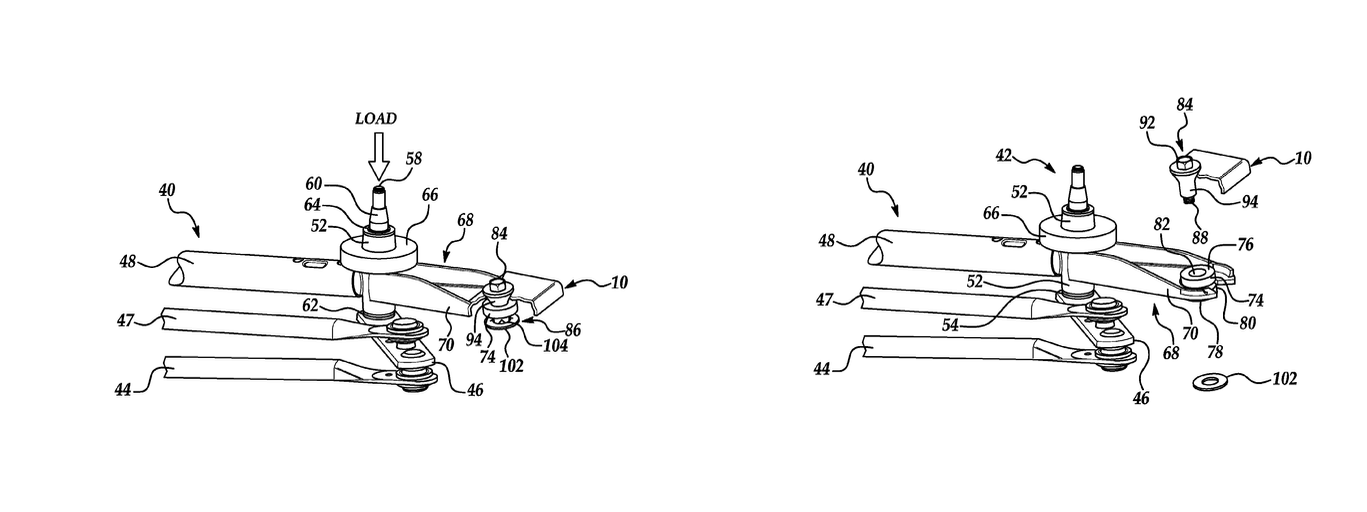
Slots reduced the ferrule's cross section and created controlled bridge sections. Those bridges retained the mounting bracket during normal operation but separated when the pivot received a predetermined impact load. Once the ferrule released, the pivot assembly could move downward below the pedestrian-impact line while leaving the internal pivot mechanism intact.
Internal loading tests followed by independent impact verification
The breakaway concept was first evaluated in Trico's engineering laboratory using both static loading and simulated dynamic impact testing. After the internal development demonstrated predictable, controlled release characteristics, the design was independently evaluated at an accredited test laboratory against the applicable European pedestrian-impact requirements.
The concept successfully met the independent test criteria, demonstrating that Trico had developed a technically viable pedestrian-compatible windshield-wiper pivot system. Although the suspended ferrule design ultimately did not enter production, the validated concept positioned the company to compete for future vehicle programs requiring compliance with emerging European pedestrian-protection regulations.
A simpler frangible casting replaced the separate sacrificial ferrule
The patent proved the safety principle, but the suspended mounting arrangement was more complex than necessary for high-volume production. During 2005-2006, I pioneered a simpler solution based on the pivot casting itself.
Material was removed from selected horizontal mounting features and the vertical walls were thinned to establish a controlled fracture path. The pivot remained strong enough for all normal operating, assembly, and environmental loads, but its mounting features could fracture predictably under the pedestrian-impact load.
Finite element predictions matched physical fracture behavior
I led the finite element analysis investigations and virtual validation used to tune the casting geometry. I also led the computer-aided design model creation, drawing releases, controlled loading tests, impact testing, and the decision to release the technology on production programs.
Physical testing confirmed that the pivot fractured at the intended location and at a load within the analytical model's expected margin of error. That correlation established confidence that the design could be optimized for controlled failure without compromising normal wiper-system performance.
Normal-service validation retained
- Vehicle and wiper-system vibration.
- Motor stall and wiper-arm stall.
- Obstructed operation and snow-block loading.
- Full durability cycling.
- Low-temperature stall and snow-load testing.
- Controlled loading and pedestrian-impact testing.
Production adoption established a new Trico pivot standard
The frangible pivot was subsequently introduced as a running change on the Hummer H2 and released on the Dodge Ram DS program. Although pedestrian head-impact compliance was not required for the United States and Canadian certification of those vehicles, the architecture was adopted because it passed the full durability requirements while reducing material and cost.
Following successful production implementation, the frangible casting became Trico's standard pivot architecture. Whether controlled fracture was required on a particular vehicle depended on hood geometry, available clearance, and the defined impact locations, but the company now had a validated architecture available wherever the package required it.
Regulatory readiness became a lighter production standard
- Patented breakaway concept passed internal loading and independent impact validation.
- Established a credible technical response to emerging European pedestrian-protection requirements.
- Finite element analysis accurately predicted the production pivot's fracture location and load.
- Production architecture passed full wiper-system durability and environmental testing.
- Reduced pivot-casting material by approximately 15% with moderate cost savings.
- Successfully transferred from validated concept into production applications on the Hummer H2 and Dodge Ram DS.
- Frangible pivot architecture became the Trico production standard.
A tightly controlled structural strength window
The pivot had to survive vibration, durability, motor stall, snow loading, low-temperature operation, assembly, and service, yet fracture predictably under pedestrian-impact loading.