Scania NCG complete wiper-system development.
Winning and developing Trico's first European heavy-duty commercial-truck wiper-system program—while serving as Engineering Manager, lead development engineer, and principal technical interface with Scania engineering in Södertälje.
The program combined a new 24-volt, 50+ Nm motor, separate LHD and RHD modules, 28-inch blades, blade-mounted washer nozzles, unusually stringent NVH and durability requirements, and a four-year development path from Scania's May 2012 selection of Trico as development supplier to June 2016 SOP.
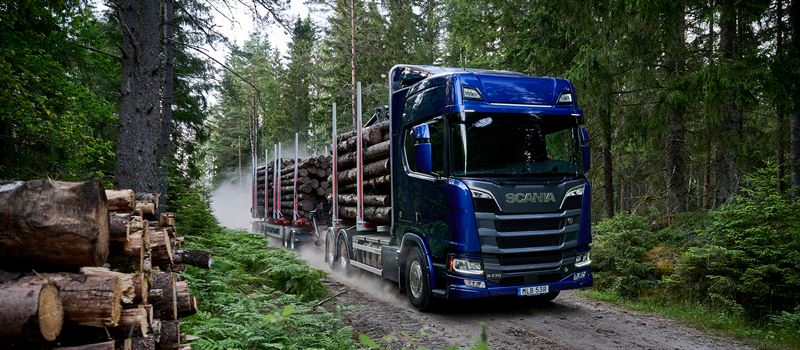
Entering a new European heavy-truck market
Scania began investigating Trico as a potential supplier around 2009. Scania performed multiple risk evaluation audits of Trico's engineering and manufacturing capability over the next 2.5 to 3 years. After demonstrating our capabilities and achieving a green risk rating, Scania selected Trico as the engineering source to design and develop the NCG wiper system. The opportunity represented a new market segment for Trico: a complete front wiping system for a European heavy-duty truck manufacturer with demanding technical standards and no established production history with Trico in this segment.
The sourcing process occurred in two stages. After being selected as the engineering source, Trico had to successfully develop the system and pass Scania's technical approval gates before receiving the official production award in November 2013. I served as the principal technical interface, developed the system proposal, and built the working relationship with Scania engineering in Södertälje.
The work overlapped substantially with the Maserati M156 program. During portions of the development period I could be in Torino supporting Fiat one week and in Sweden supporting Scania the next.
A purpose-developed heavy-duty wiping architecture
Trico supplied the complete front wiping system: motor, linkage/module, pivots, arms, blades, washer hose, and new blade-mounted washer nozzles. Separate LHD and RHD modules shared the application motor and selected linkage components, including pivot shafts and some levers. Both used 28-inch blades, with mirror-image LHD and RHD blade content.
I designed and released the complete system except for the internal blade assemblies and internal motor design. Trico Core Engineering owned blade design and Trico Motor Engineering owned the new motor. I integrated those subsystems into the complete vehicle system and directly developed the washer-nozzle architecture.
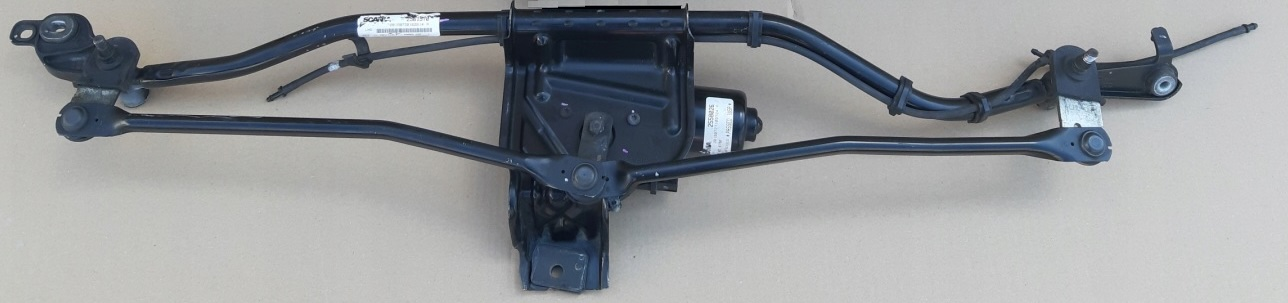
24 volts and more than 50 Nm of stall torque
The application required substantially greater output than the approximately 36 Nm-class 12-volt motors common on the North American applications familiar to Trico. The Scania motor was a new 24-volt development producing more than 50 Nm of stall torque.
The torque requirement was driven primarily by the two long 28-inch blades and the large wipe angle. Those characteristics increased system loads and made linkage geometry, pivot loading, module stiffness, mounting stability, and durability especially important.
Low speed was approximately 30 cycles per minute and high speed approximately 52 cycles per minute—deliberately moderate relative to typical automotive practice because of the application's NVH sensitivity.
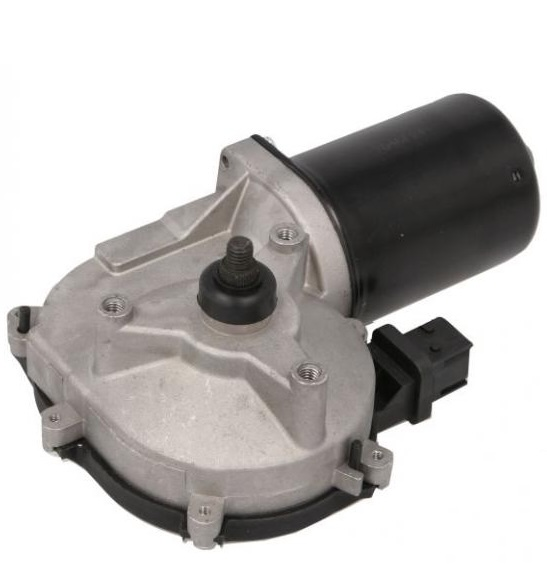
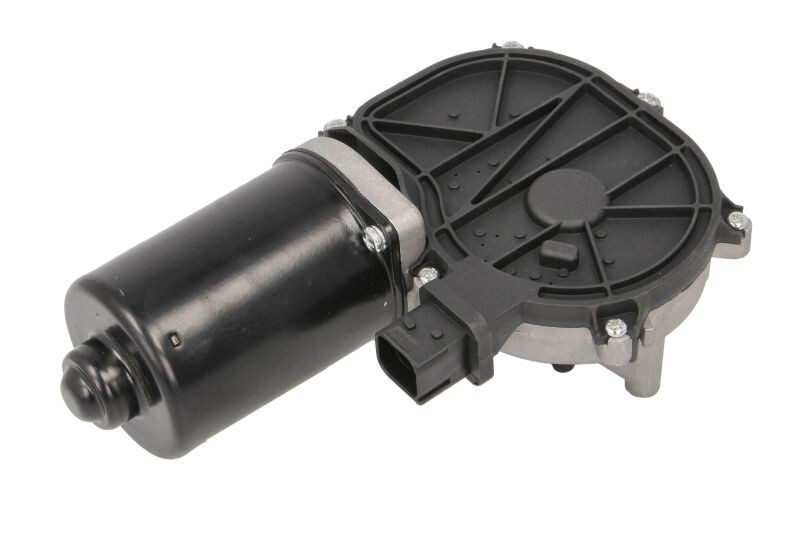
Keeping dynamic movement below a 50 mm cowl-contact limit
The wiper arms parked very close to a hard plastic cowl/trim component on a nearly vertical windshield. Pattern growth at the cowl had to remain below approximately 50 mm from nominal park or the arm could contact the trim.
Motor location between the two pivots made tight geometric control of the linkage particularly important. Pattern stability was managed through controlled linkage geometry and mounting behavior rather than simply making the assembly rigid.
Original center-grommet concept
I developed a completely new center mounting grommet specifically for this application. The design used a large contact area against both the module bracket and the vehicle sheet metal, helping prevent the module from rolling side to side during operation while still retaining the compliance needed for noise isolation.
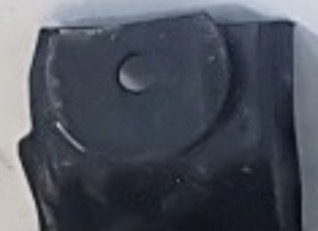
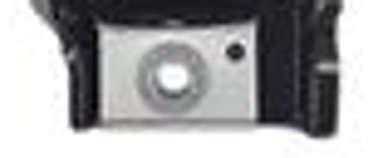
A module mounted to a structure that behaved like a drum head
The module was mounted directly in front of the occupants on a large sheet-metal panel. That panel was highly sensitive to transmitted module vibration and structure-borne noise and could behave much like a drum head.
Scania used both measured dB-level requirements and subjective noise assessment. Component and module sound testing was performed in a chamber. Vehicle testing was typically conducted inside the cab with a binaural headform to characterize the occupant experience.
The engineering tradeoff was therefore unusually tight: enough mounting control to limit module roll and pattern growth, but enough isolation to prevent the cab structure from amplifying motor, linkage, and reversal noise.
4.5 million cycles plus Scania Combined Tests
The complete system underwent a stand-alone continuous 4.5-million-cycle durability test. Pattern-growth measurements were used during durability validation to verify that wear and accumulated movement did not push the wiped pattern beyond the available cowl clearance.
The complete module also underwent vibration-fatigue testing. Scania additionally required Combined Tests that repeated multiple environmental and durability legs. One such sequence incorporated corrosion exposure, wiper operating cycles, temperature exposure, and vibration; other combined-test variants were also used.
These methods were substantially more demanding than many customer validation practices in use elsewhere at Trico and required the design and DVP&R strategy to be built around Scania-specific evidence.
Blade-mounted nozzles validated against a two-cycle mud-cleaning requirement
I developed the blade-mounted washer-nozzle system, including the number and orientation of jets, attachment to the blade and arm, hose routing, spray-pattern development, and validation against Scania's cleaning test.
The test used a specified road-grime / mud mixture applied to the windshield and allowed to dry. The system had to clear 100 percent of the wiped area within two wipe cycles while washer fluid was being sprayed. Validation was performed both statically and dynamically at vehicle speeds.
From direct development ownership to Engineering Director oversight
I personally presented the technical information at Scania in Södertälje for the formal design-freeze / technical approval gate. By 2014 the design had been frozen and the A- and B-prototype phases had been successful.
After my promotion in 2014, I transferred day-to-day program execution to a subordinate engineer in the July / August 2014 timeframe. That engineer took responsibility for the final C prototypes, Production Validation testing, launch execution, and launch support. I remained the Engineering Director overseeing the program through production.
The core complete-system development team had been deliberately lean—primarily myself and one designer—with Motor Engineering supporting the separate motor-development work.
Matamoros production with European repackaging
Trico manufactured the modules, motors, arms, blades, and integrated-nozzle content in Matamoros, Mexico. The parts were then shipped to Trico's operation in Dunstable, UK for repackaging into Scania-approved returnable containers.
The two-stage packaging strategy avoided cycling Scania returnables all the way to Mexico and improved transatlantic pack density. More components could be shipped efficiently in Trico expendable export packaging, then transferred into the customer's returnable packaging in Europe at lower overall logistics cost.
On-time June 2016 SOP and a clean launch
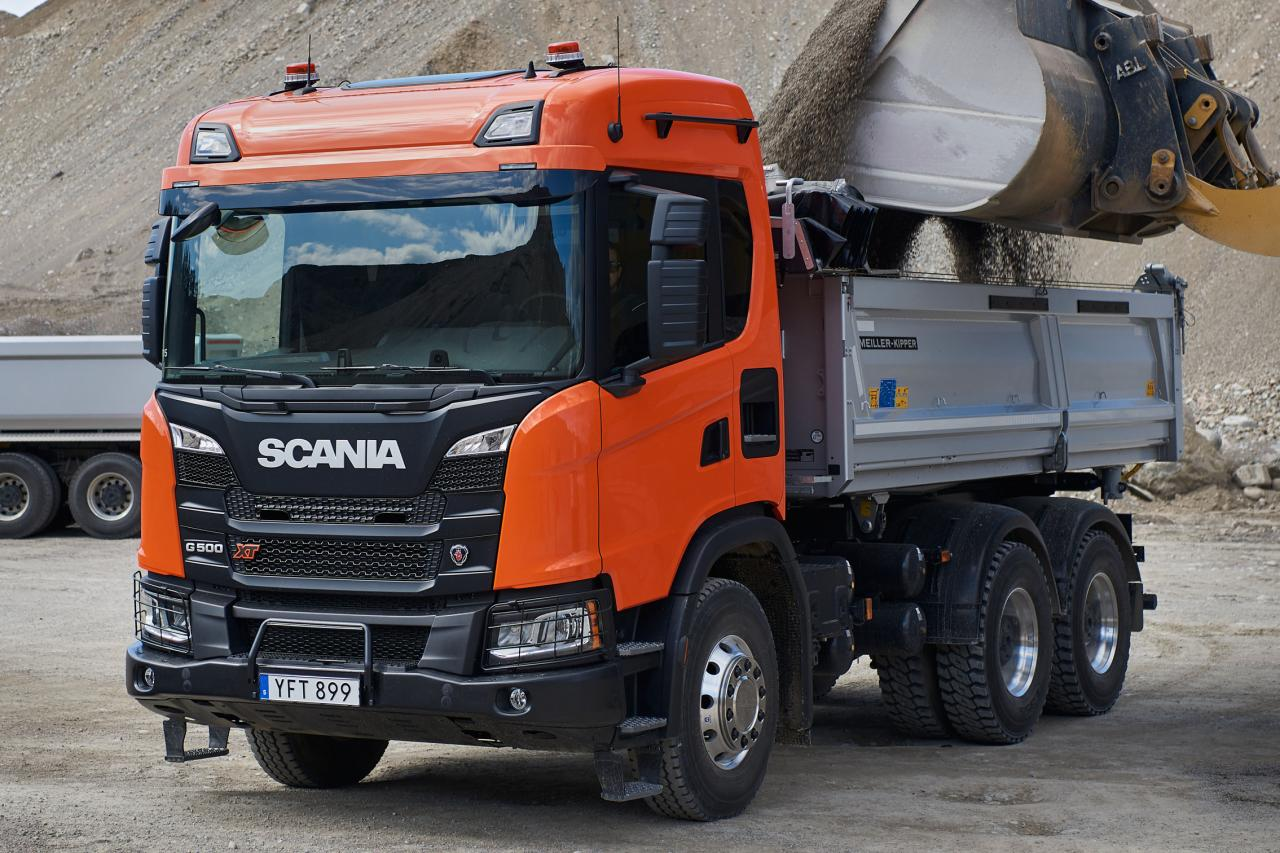
The first G-series truck platform reached SOP in June 2016. The cab architecture was used across multiple Scania G-series configurations, with the same fundamental wiping system supporting LHD and RHD variants. Scania also produced the new-generation trucks in Brazil.
The launch was clean and on time, with very few issues. One minor post-launch issue involved Trico's manufacturing welding setup and required correction, but it was a manufacturing-process issue rather than a fundamental system-design problem.
Technical credibility that carried into later heavy-truck acquisition
The Scania program strengthened Trico's credibility in European heavy-duty wiping systems. That credibility likely contributed to a later Volvo truck award known internally as the Volvo 6700 program.
That Volvo business was awarded around an articulating-pivot concept I had invented. The program progressed to immediately before production-tooling kickoff before Trico withdrew because of internal financial issues associated with First Brands Group. It therefore should be understood as a technical-acquisition success, not a production launch.